how leaders learn
by david novak
At the core of this book by former Yum! CEO David Novak, is the idea that “active learners are painters. Artists. When you see life as a “masterpiece in progress,” you are always learning, always engaging, always thinking, and always contributing. From 2 to 102 and beyond, life is an opportunity to create, and learning is at the core of that journey.
With this mindset, Novak brings together lessons from his career at PepsiCo, in marketing agencies, and as a global CEO, blending stories with key leadership principles. What I liked most about his presentation was his honesty about failure and challenge, his compelling use of stories from some of his best marketing and leadership moments (think Crispy Strips!), and his transparency about what it takes to succeed in a large organization. I think his perspective translates to anyone who sees leading and learning as a lifelong journey. For Novak, the imperative is, “to learn, to be disciplined about that learning,” and to see where it takes you.
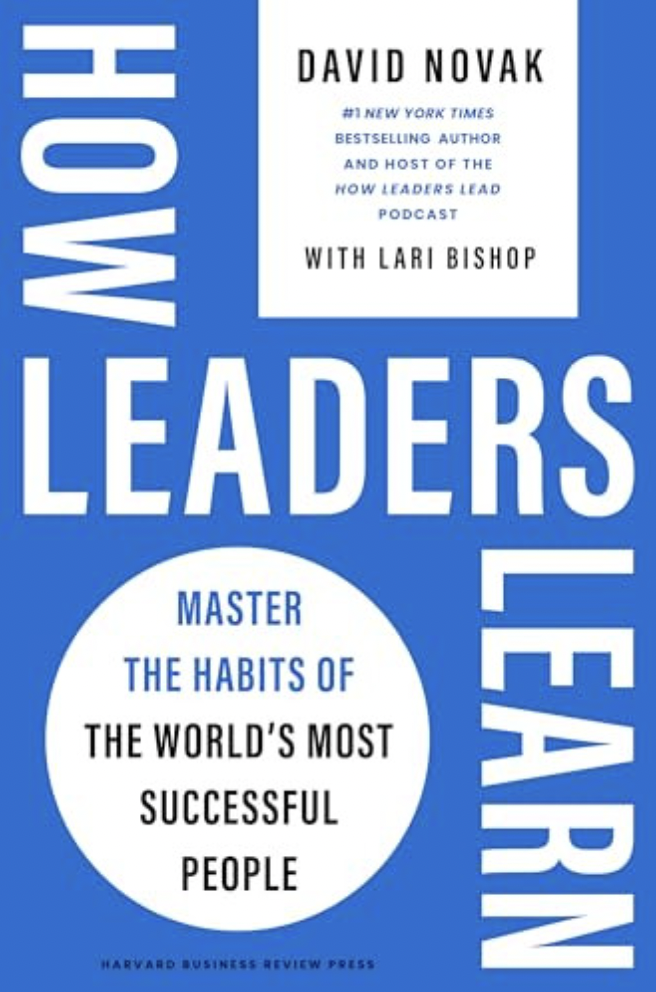
The book is organized into three parts: learn from (we are all surrounded by people, ideas, experiences that are available right now); learn to (this is a breakdown of the most essential skills you need to learn – listening, asking better questions, developing pattern thinking, etc.); learn by (learning by pursuing joy, simplifying, solving problems, exposing yourself to new experiences and environments).
The chapters are short, story-driven, and you can pick one section up and read it pretty quickly. I underline books as I read them, which helps me write these reviews pretty quickly as I have a method for taking notes right in the pages that helps me outline what I think are the most salient points to include in the reviews. Novak’s book is one I can pick up at any moment, flip to a page, and read something pretty incredible and powerful that I go away thinking about. I would buy this one in hardcover and keep it around as a reference. It really is great and it continues to shape the way I lead.
Key ideas I loved:
- Create a culture that makes people want to come to work every day.
- When you are forced to distill your thoughts onto paper, when you have to write it down, you “learn what you already know.”
- When you bring your authentic self to work and life, it allows others to do the same. He references Oscar Wilde: “Be yourself; everyone else is taken.”
- Happy in challenge is better than miserable in success.
- You can learn from anyone, anywhere: “check the assumptions you’re making that limit the people who are in your sphere of influence.”
- Active learners analyze their wins as well as their losses. Learn from your wins that you can make it, “chase the joy of winning,” and build belief in your ability to win.
- A crisis teaches you three things: what you are capable of, how to avoid a similar crisis in the future, and how to survive, and maybe, even emerge stronger.
- Do hard things when you’re in a good mood. (I LOVE THIS!)
- Simplicity = sanity (I love simple! Keep things focused, as you grow, don’t overcomplicate!)
- Ask the simplest question possible “to get the most important and insightful answer.”
- Find joy in the small things: they are the big things!
- Pursuing joy helps you spread joy and “joy generates a lot of success.” (LOVE)
- “You may not be able to control your circumstances, but you can control your response to those circumstances.”
- One of the best things you can learn from your “wins” is that you can, in fact, win. You’re “collecting evidence” that you can use to take on the next challenge. Analyze your wins as well as your losses: make “winning a habit.” Another key here: “leaders should be accountable for what goes wrong, and give away credit for what goes right.”
I think the best stories he tells are the unique ways he seeks to give credit to and honor others. He calls it, “the power of recognition.” Part of recognition is staying connected to teams at every level in the organization. He warns against getting disconnected from the people carrying out the vision on the ground. “Leaders are taught to delegate, but you have to avoid becoming disconnected, especially from the fundamental work of the business and the people making it happen.”
When you become an active learner, when you make growing, trying new things, attempting, part of the way in which you approach the world. You “learn about what you’re capable of, and that opens up so many possibilities in our lives.”
One of the ways I have benefitted from David’s wisdom beyond this book, is listening to his Podcast, “How Leaders Lead.” He opens each episode by introducing the person he is about to interview as: “my friend, and soon to be yours…” and it really is such a warm, inviting, open conversation with leaders from Jamie Dimon to Peyton Manning. I highly recommend reading this book, and then becoming a regular listener to his podcast.