“Leaders are portrayed as visionary mavericks, charismatic disruptors, or moral change agents somehow blessed with a magical touch for singlehandedly creating a better future.”
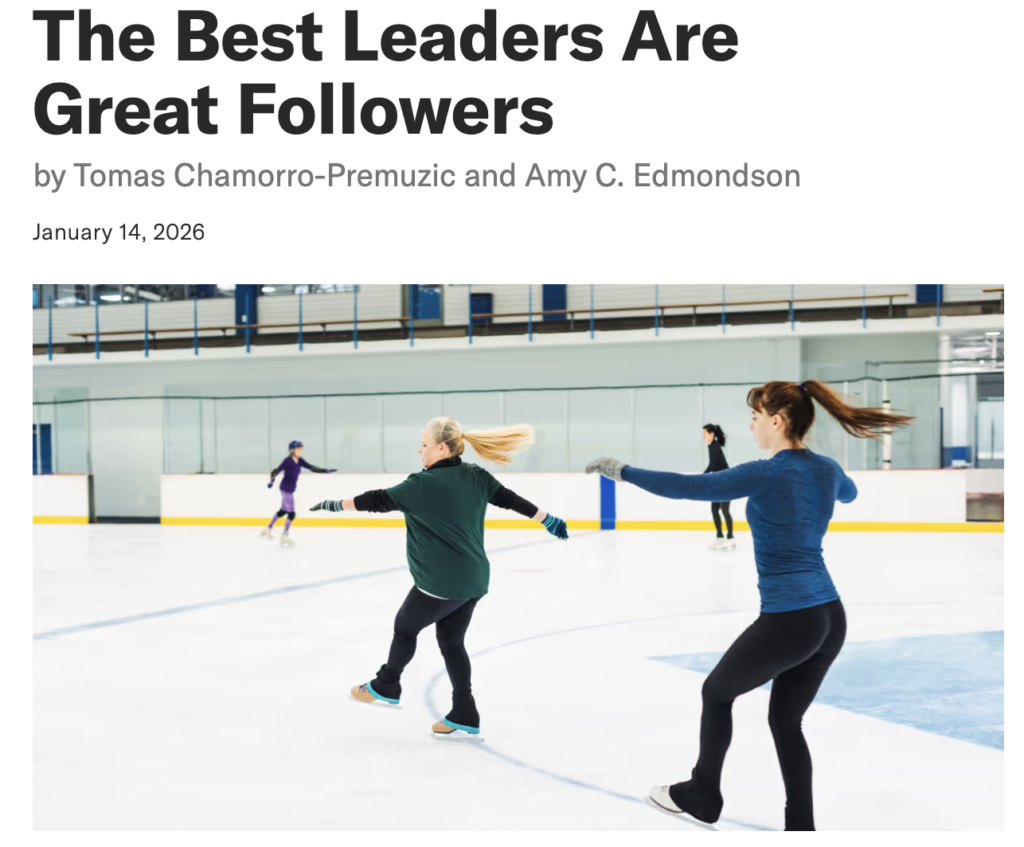
One of the best articles I read this week was “The Best Leaders are Great Followers” written by Dr. Tomas Chamorro-Premuzic and Amy C. Edmondson. They argue against this magical, mythical idea of leadership. Instead they focus on followership: effective followership requires the capacity to learn, listen, collaborate, challenge, and adjust in service of something larger than oneself
For Chamorro-Premuzic and Edmondson, these are actually some of the hardest traits to cultivate. Leaders often fail because they forget that their job is to help people want to follow the things that they do and say not just simply to get them to follow them.
Leaders must cultivate the ability to “bring people together, connect ideas, continually learn, and blend diverse perspectives. “They “build trust through collaboration”
Here are the five things you need to do to become a better “follower” and work at “persuading others to do things beyond their self-interest, in support of a larger collective.”
- Active listening
- Prioritize purpose, not personal credit
- Reliable execution – it takes skill to turn strategy into reality
- Critical dissent – this expands the organizations intelligence because you hear perspective you might not otherwise be exposed to. Avoiding conflict produces more conflict in the long-term so getting everybody’s ideas on the table to beginning is powerful.
- Coachability- “treat improvement as part of your identity” “Coachability is the antidote to the complacency that often accompanies positional power.”
“In short, the best leaders are not heroic commanders; they are exemplary followers: people who listen deeply, learn relentlessly, collaborate widely, question bravely, and adjust continually. And because they follow so well, others willingly follow them.”
As I reflected on these ideas I think this is really where my framework, Lead with How, has a lot to offer. “How” isn’t one charismatic idea or person, it’s recognizing the identity of your organization, naming the powerful work you are doing together, and lifting out the stories that show impact, and the data that shows scale. It’s building a way to recognize and deepen collaboration by connecting your mission (what you do) to your vision (why you do it!) by consistently naming how you work as a team.
The key component from above that I think the framework speaks to most is both the purpose (embedding all of the work in how it achieves your vision) and the reliable execution (showing that you do this in a repeated way across your business or nonprofit). And at the core, it really is about listening. Listening to the reality on the ground – how do people experience your work and impact? When people can see this clearly, they want to follow – they want to work alongside you to achieve more for their community.
I loved these ideas around Leadership as Followership and the power of building capacity to act as a listener and connector.